This post contains affiliate links. As an Amazon Associate I earn from qualifying purchases. If you click a link and make a purchase, I may receive a small commission at no extra cost to you.
Most cycle syncing food guides hand you a color-coded spreadsheet and a shopping list the length of your arm, and somewhere around the third obscure ingredient you quietly close the tab. This is the gentler version. Cycle syncing foods aren’t a rulebook — they’re just the idea that your body asks for slightly different things at different points in the month, and that you’re allowed to listen.
Your cycle moves through four phases, and your energy moves with them. Some weeks you feel bright and capable. Some weeks you want soup and an early night. None of that is a character flaw or a willpower problem — it’s rhythm. Eating with that rhythm doesn’t require perfection or a single special powder. It mostly requires noticing.
Here’s what each phase tends to ask for, in real food you already recognize.
The four phases, in plain terms
Quick map before the food, because the names get thrown around like everyone was handed a diagram in school. Your menstrual phase is your period itself. Your follicular phase is the week or so after, as energy climbs back. Your ovulatory phase is the short, bright window in the middle. And your luteal phase is the stretch before your next period — the one that often arrives with cravings and a shorter fuse.
Nobody’s cycle runs on a tidy 28-day timetable, and yours doesn’t have to for this to be useful. You’re not aiming for precision. You’re aiming for the general shape of the month, so the food feels like support instead of one more thing to get right.
Menstrual phase: warm, simple, restful
This is the rest phase, and the food can rest too. When you’re bleeding, most of us don’t want a project — we want something warm and easy that asks nothing of us. Lean into that. Soups, stews, slow-cooked things, a pot of something that mostly cooks itself.
Iron-rich foods earn their place here, because a period is, quietly, a small monthly loss of it. Think red meat if you eat it, lentils and beans if you don’t, dark leafy greens either way. Pair the plant sources with a little something bright — a squeeze of lemon, some peppers, a handful of berries — because vitamin C helps your body make use of the iron. A bowl of lentil soup with a spinach handful stirred in and lemon on top is the whole idea in one bowl.
Warm over raw, this week. Your body is doing enough; it doesn’t also need to heat a cold salad from the inside.
Follicular phase: fresh, light, and a little ambitious
As your period ends, energy starts climbing, and food can get brighter and lighter to match. This is the phase where a big colorful salad actually sounds good rather than like punishment. Fresh vegetables, crisp things, lighter proteins like eggs, fish, and chicken.
It’s also a naturally good week for anything fermented or fresh — a little sauerkraut, some plain yogurt, sprouted things if that’s your world. You’ve got more get-up-and-go, so if there’s a slightly more involved recipe you’ve been meaning to try, this is the week it won’t feel like a chore. The kitchen version of a clear morning.
Ovulatory phase: bright, colorful, and light on your feet
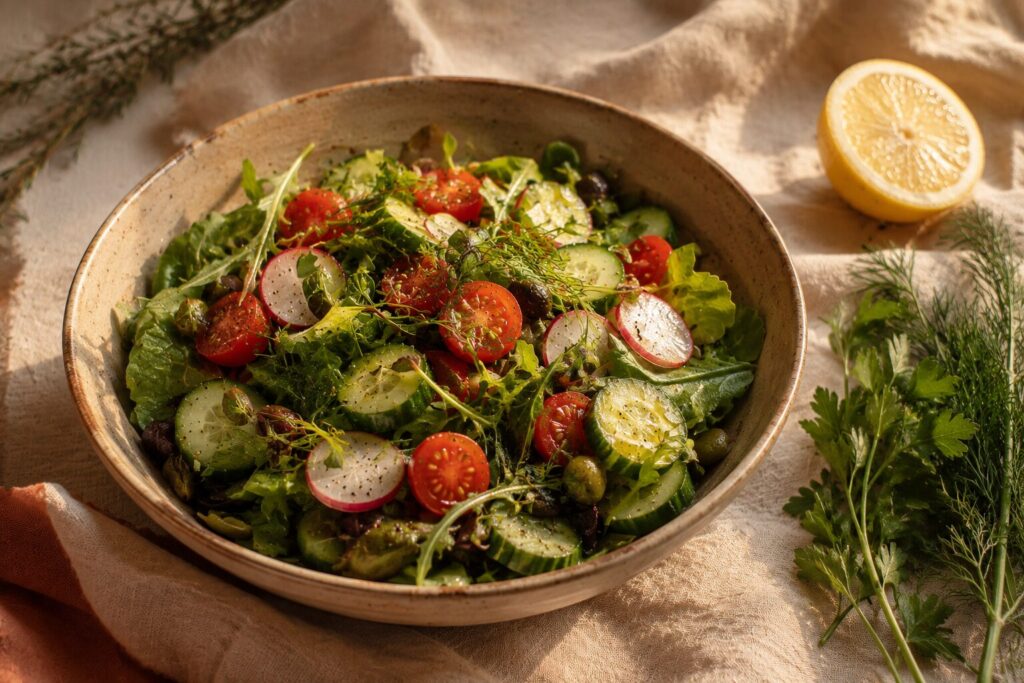
The ovulatory window is short and usually your highest-energy stretch, so the food can stay light and vibrant — you don’t need heavy fuel to get through a day you already feel good in. Loads of vegetables and fruit, lighter proteins, plenty of color on the plate.
This is raw-and-fresh season if any phase is: big salads, crudités, fruit you eat with your hands. Anti-inflammatory foods are a nice fit here — berries, leafy greens, a drizzle of good olive oil. Nothing fussy. You feel light, so you eat light, and it’s pleasant rather than restrictive. Enjoy it; it doesn’t last long.
Luteal phase: steady, grounding, and cravings-aware
Then comes the luteal phase — the pre-period stretch — and this is where cravings show up and patience gets thin. The instinct is to white-knuckle through the sugar pull, and the kinder move is to feed the craving something with actual staying power before it becomes a 9pm negotiation with the cupboard.
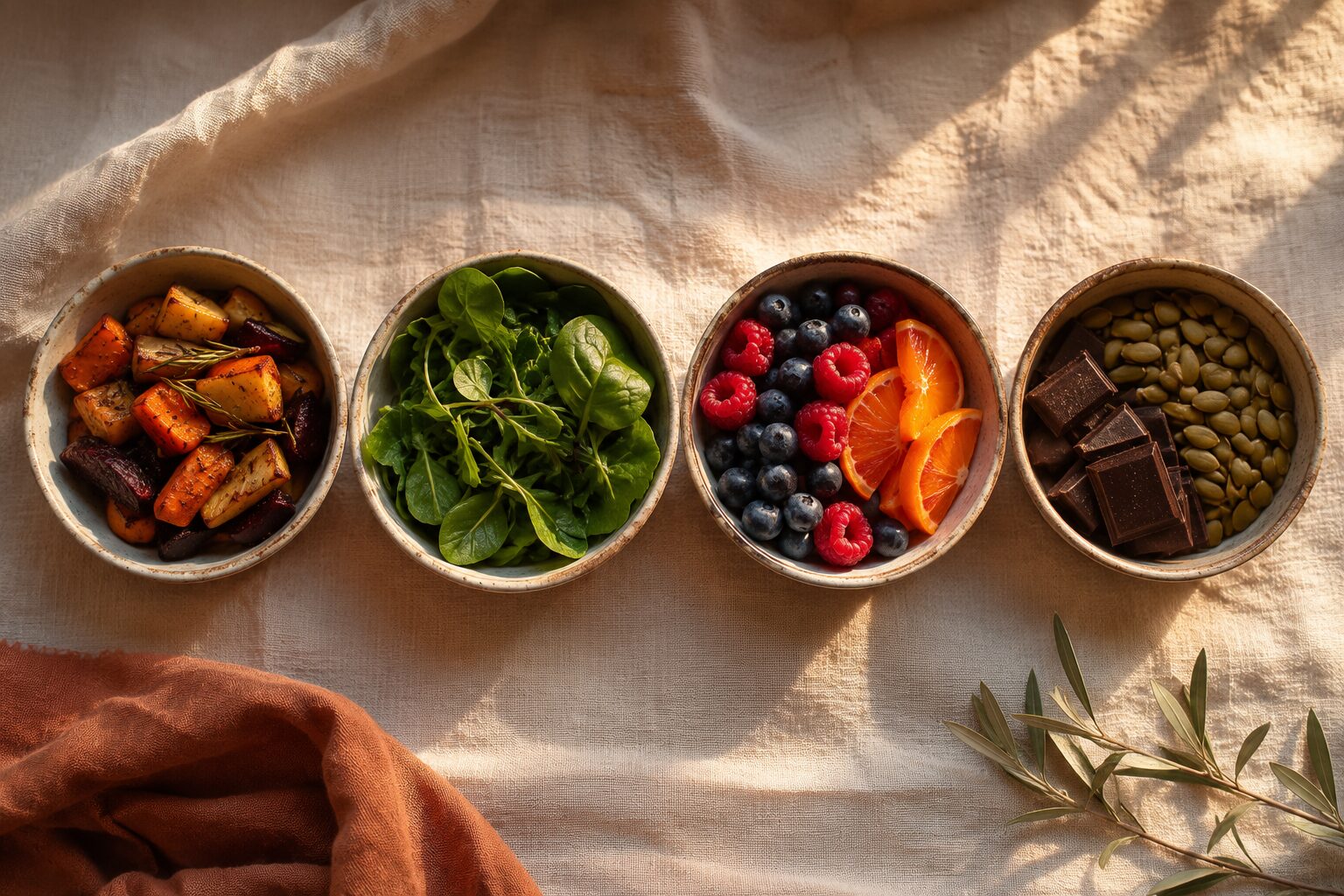
Grounding foods help: roasted root vegetables, sweet potato, squash, whole grains if you eat them. Magnesium-rich foods have a real fan club in this phase — dark chocolate (the genuinely dark kind), pumpkin seeds, leafy greens — and a square of dark chocolate is a far easier evening than a bar of the sweet stuff and the slump after. If you want something sweet, reach for berries first; they scratch the itch without the crash.
Keep meals a little more substantial this week. Protein and healthy fat at each meal steady you far more than another round of something sweet ever will. The luteal phase is less about restriction and more about not leaving yourself hungry and unarmed at the exact moment you’re most likely to raid the kitchen.
The honest part
Cycle syncing is a lifestyle idea, not a medical prescription, and the science on it is genuinely still thin. I’m not going to tell you a bowl of pumpkin seeds will fix anything or balance anything — that’s not a promise anyone can honestly make. What I can say is that eating warm and iron-rich on your period, light and fresh mid-cycle, and grounding and steady before it tends to feel good, and feeling good is reason enough. If something in your cycle feels genuinely off — pain that stops your day, changes that worry you — that’s a doctor conversation, not a food one.
You also don’t have to do all four phases at once. Pick the phase you struggle with most — for most of us it’s the luteal week — and just try eating for that one. Rhythm isn’t all-or-nothing. You can always begin again next month.
The four phases are easy to grasp and genuinely annoying to keep track of in real life. That’s exactly what The Steady Cycle Guide is for — the whole STEADY method, a phase-by-phase food guide you can actually print, and a simple tracker, all in one calm place instead of scattered across a dozen open tabs.
Start with your next period. One warm bowl, one phase, no spreadsheet. That’s cycle syncing, and that’s enough.
— Remi
Leave a Reply